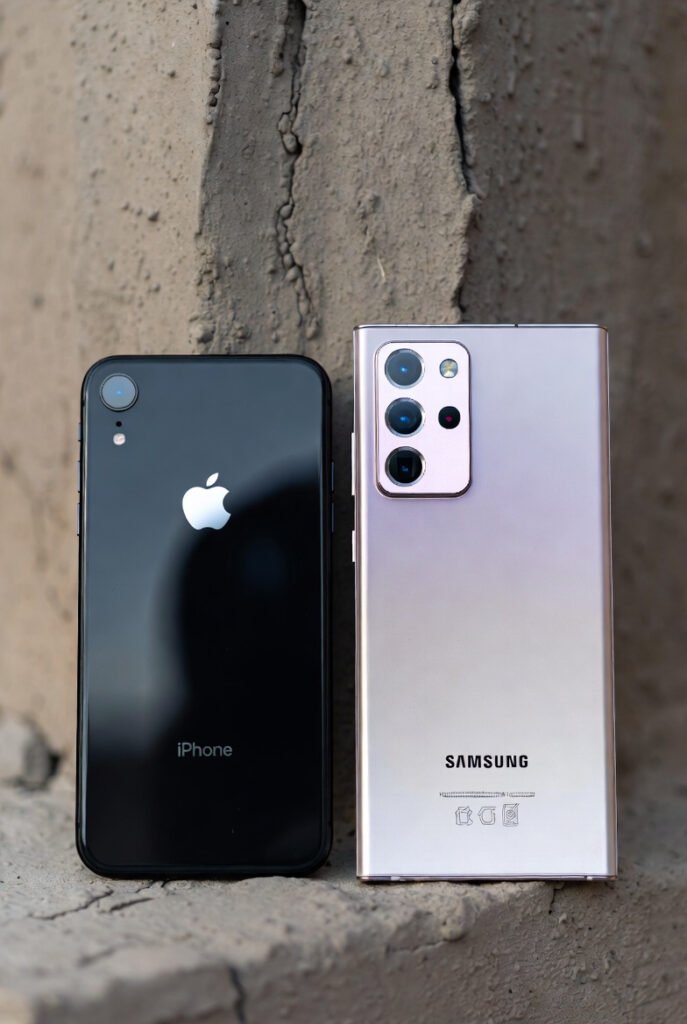
Below, we detailed down some of the pros and cons of iphone and Samsung phone that could help you make a choice the right way
Pros of iPhone
Smooth Performance & Long Software Support
iPhones are known for fast, responsive performance and long-term iOS updates (often 5–6 years), keeping older models useful for longer.
Seamless Ecosystem Integration
If you use other Apple products (Mac, iPad, Apple Watch), everything works together smoothly — like AirDrop, Continuity, and syncing across devices.
Strong Resale Value & Camera Quality
iPhones tend to hold value better when reselling, and their cameras deliver consistent, natural-looking photos and excellent video quality.
Cons of iPhone
High Price
iPhones are usually more expensive upfront than many Android options.
Limited Customization & Closed System
iOS offers fewer ways to customize the interface and restricts some third-party modifications.
Fewer Model & Feature Choices
There’s less variety in styles, sizes, and hardware features compared with Samsung’s broad lineup.
Pros of Samsung Phones
Variety & Customization
Samsung offers many models across price ranges and deep Android customisation options (home screens, widgets, default apps, etc.).
Leading Display & Innovative Designs
Samsung is famous for vibrant AMOLED screens with high refresh rates and unique foldable phones.
Flexible Hardware Features
Many Samsung phones include features like expandable storage, faster charging, and advanced camera modes (e.g., pro-modes and powerful zoom).
Cons of Samsung Phones
Software Updates Inconsistency
Android updates for Samsung devices (especially lower or mid-range models) can arrive slower or for fewer years than iPhone updates.
Variable Resale Value
Samsung phones often lose value more quickly in the used market compared with iPhones.
With the above listed pros and cons of both brands, you can make your choice before purchasing .
Make the right choice before purchasing to avoid regrets later.